How to Know if a Football Academy in Nigeria is Legit
Nigeria has no shortage of football academies. Walk through any major city on a Saturday morning and you will find groups of young players training on pitches, community grounds, and sometimes on bare patches of land with makeshift goalposts.
Some of those groups are genuine development programmes run by people who care deeply about Nigerian football. Others are operations that take money from families and deliver very little in return.
A small number are outright scams designed to exploit the dreams of talented young players and the love of parents willing to sacrifice for their children.
Knowing the difference before you commit your child and your money to any academy is one of the most important things you can do as a Nigerian football parent.
Start With the Basics: Can You Verify They Exist?
The first test of any football academy’s legitimacy is whether you can independently verify that it exists and operates as described.
This sounds obvious but many parents skip this step entirely, relying only on information provided by the academy itself or by whoever referred them.
Search for the academy online. Do they have a website, a social media presence, or any mention in local sports news? An academy that has been operating for any meaningful length of time will have some kind of digital footprint, even if it is modest. If you search for the academy and find absolutely nothing, that is worth noting.
Look for an official registration. Legitimate sports organisations in Nigeria can be registered with the Corporate Affairs Commission or with the relevant state sports commission.
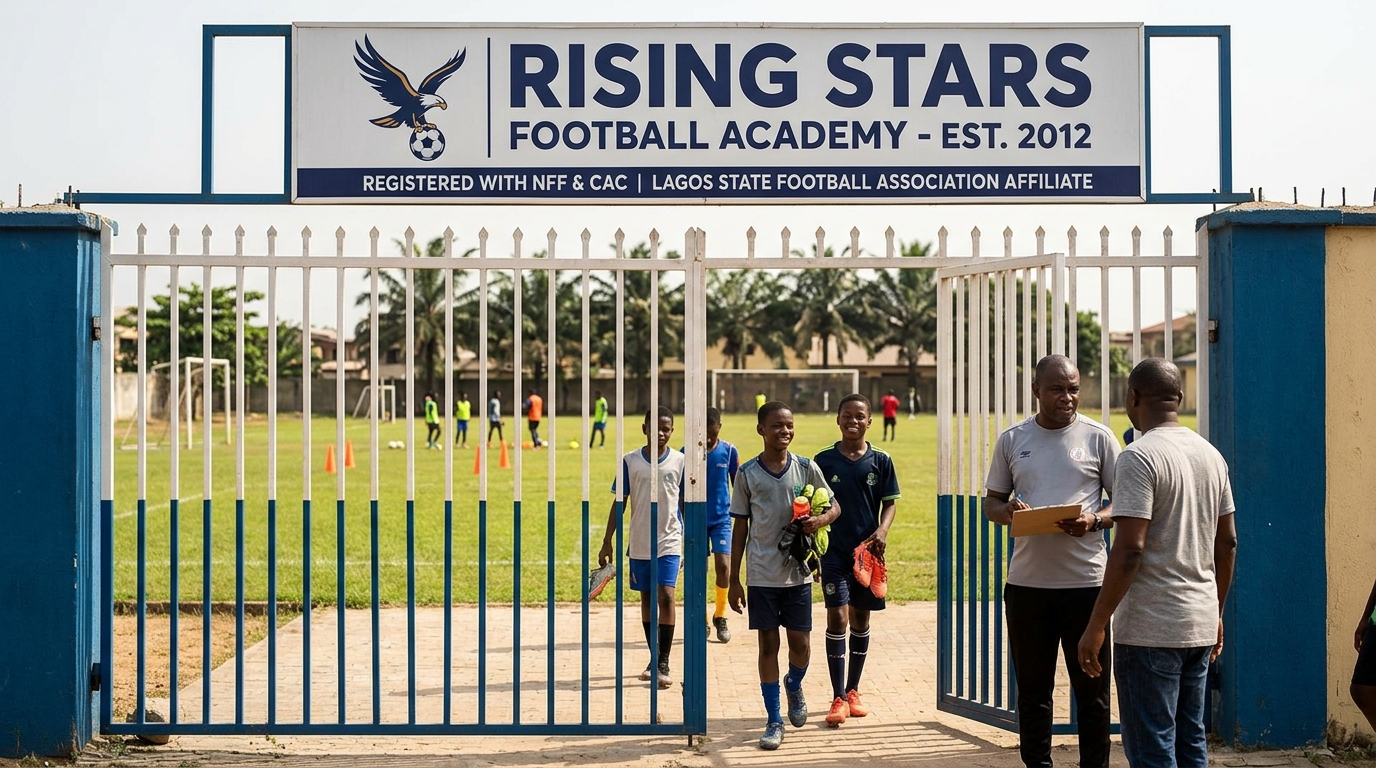 Asking an academy whether they are officially registered and with which body is a reasonable question that a legitimate operation will answer without hesitation.
Visit the training ground in person before committing to anything. An academy that discourages you from visiting or that is evasive about where and when they train is showing you something important about how they operate.
Look at the Coaching Staff Carefully
The quality and legitimacy of an academy’s coaching staff is one of the clearest indicators of the seriousness of the operation.
Ask directly about the coaches. Who are they? What is their football background? Do they hold any coaching certifications from the Nigeria Football Federation, the Confederation of African Football, or FIFA?
A legitimate academy will be proud of its coaching staff and will give you clear, verifiable answers to these questions.
They may even introduce you to the coaches directly during a visit. If an academy is vague about who is actually coaching the players, or if the only answer you get is that the coach is “experienced” without any specifics, push for more detail.
It is also worth asking how many coaches are on staff relative to the number of players in the programme.
An academy with one coach managing 60 players simultaneously is not providing genuine individual development regardless of how legitimate the operation is. Reasonable coach-to-player ratios allow for the kind of individual attention that actual development requires.
Ask About Their Track Record
A legitimate football academy that has been operating for a reasonable period of time will have players who have passed through their programme and gone on to achieve something in the game. Ask the academy directly: can you name players who trained here and went on to sign professional contracts, represent state teams, or earn university sports scholarships?
A genuine academy will have names to give you. They will be specific.
They may even be able to connect you with former players or their families who can speak to their experience.
An academy that cannot name a single player they have successfully developed despite claiming to have been operating for years is telling you something significant about the gap between their promises and their reality.
If they do give you names, take the extra step of verifying at least one or two of them.
Search for the player online. Ask around in the local football community. A claim that can be independently verified is worth far more than one you simply have to take on faith.
Understand Exactly What You Are Paying For
Financial transparency is one of the clearest markers of a legitimate operation.
Before paying any money to any academy, you should have a clear written breakdown of what the fee covers, how often it is charged, what happens if payment is late, and what additional costs you should expect beyond the base fee.
A legitimate academy will provide this information clearly and without pressure. They will give you time to consider it, ask questions, and make an informed decision.
An academy that pressures you to pay quickly, that is vague about what the fee includes, or that keeps revealing new costs after you have already committed is not operating with the transparency that serious organisations maintain.
Ask specifically whether there is a written agreement or contract. A formal academy with proper governance will have documentation that outlines the terms of your child’s participation. This protects both the academy and the family and its existence signals that the organisation takes its responsibilities seriously.
Watch for These Specific Red Flags
Certain patterns appear consistently in illegitimate football academy operations in Nigeria and learning to recognise them will protect your family.
Unsolicited approaches are a common starting point for scams. If someone contacts you out of nowhere claiming that a scout or academy representative spotted your child and wants to offer them an opportunity, be extremely cautious. Legitimate academies with genuine interest in a player will go through transparent channels and will not pressure you to act quickly or secretly.
Requests for money before any formal process has taken place are a serious warning sign. Paying a legitimate registration fee after your child has been assessed and offered a place is normal.
Paying money upfront before a trial has even happened, or before you have visited the facility and met the coaches, is not.
Promises that sound too good to be real usually are. An academy that guarantees your child will sign a professional contract, get a foreign trial, or receive a scholarship if you enrol them is making promises that no legitimate football development programme can responsibly make. Good academies promise to develop your child properly. They do not promise specific outcomes.
Pressure to keep the opportunity secret or to decide immediately without time to think or consult other people is a manipulation tactic.
Legitimate opportunities do not expire in 24 hours and legitimate organisations do not ask families to make major financial decisions without time for proper consideration.
Talk to Other Parents
One of the most reliable ways to assess any academy is to speak with parents of current or former players independent of any introduction arranged by the academy itself.
Find these parents through your own network rather than through a list the academy provides you.
Ask them honestly about their experience. Has their child developed noticeably since joining? Is training consistent and well-organised?
Are the coaches present and engaged? Has the academy delivered what it promised when their child enrolled? Have there been any financial surprises or concerns?
Parents who have genuine experience with an academy will give you a much more accurate picture than any brochure or social media page ever will.
Trust Your Instincts
After you have done the research, visited the facility, spoken to the coaches, reviewed the costs, and talked to other parents, pay attention to what your instincts are telling you.
If something feels off despite being unable to identify exactly what it is, that feeling deserves respect. Parents who ignored their instincts and committed to an academy that later turned out to be problematic often say afterward that they sensed something was not right from the beginning.
Your child’s development and your family’s financial resources are both too important to hand over to an organisation you are not genuinely confident in. Take the time to get it right.
Written for Findin.com.ng | Parent Guides