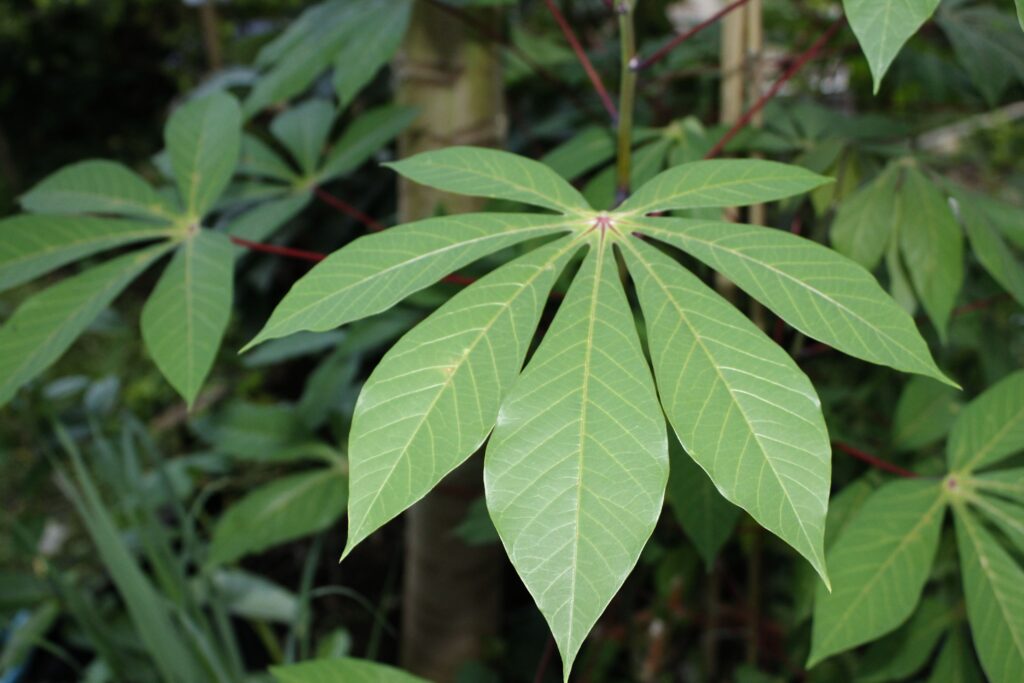
A farmer in Anambra State planted two hectares of cassava in April. By July the stems looked stunted, the leaves were curling inward, and a white powdery coating had appeared at the joints of nearly every plant in one section of the field. He assumed it was a fungal disease and applied a fungicide. Nothing changed. He applied again. Still nothing. By September that section of the field had produced less than a third of the yield from the healthy side, and he still did not know what had actually attacked his crop.
That farmer made three mistakes that cost him an entire season of income. He misidentified the pest, he treated for the wrong problem, and by the time he got the right diagnosis the damage was already done.
Cassava mealybug is one of the most misunderstood pests in African farming. It looks like a disease, it spreads like a disease, but it is an insect and it requires a completely different response. This article will make sure you never make the same mistakes that farmer made.
Mistake One: Treating It Like a Disease
The white powdery coating that cassava mealybug leaves on stem joints looks almost identical to powdery mildew fungus at first glance. That visual similarity is why so many farmers in Nigeria, Ghana, Kenya, and South Africa reach for fungicide first and lose weeks of treatment time in the process.
Here is how to tell the difference immediately.
Scrape the white coating off a stem joint with your fingernail. If what comes off is a soft, powdery wax and underneath you find small, oval, slow-moving insects clustered together, that is cassava mealybug. If the coating is dry, flat, and there are no insects underneath, it may be a fungal issue.
Cassava mealybug insects are roughly two millimetres long, soft-bodied, and covered in white waxy filaments that extend around their edges like a fringe. They do not fly. They do not scatter when disturbed. They move slowly and cluster densely at the leaf axils and growing tips of the plant.
Additional signs to confirm the identification include sticky honeydew coating on lower leaves, black sooty mould growing on that honeydew, curling and yellowing of new leaves, stunted shoot growth where the top of the plant stops extending normally, and in severe cases complete dieback of the growing tip leaving a cluster of dead stems at the top of the plant, a symptom sometimes called broom witch.
 Once you confirm it is mealybug and not a fungal disease, you can stop wasting money on fungicide and start treating the actual problem.
Mistake Two: Ignoring the Ants
Most farmers who treat cassava mealybug focus entirely on the insect colonies and ignore the ants crawling around the same stem joints. That is a critical oversight.
Ants and mealybugs have a working relationship that actively works against the farmer. Ants feed on the sweet honeydew that mealybugs secrete. In return ants carry mealybug crawlers, the newly hatched first-stage nymphs, from infested plants to clean ones. They physically transport the pest across your field and onto neighbouring farms. When you kill the mealybug colonies but leave the ants untouched, the ants simply collect surviving crawlers and redistribute them within days.
Before you spray anything, apply a physical barrier to block ant access. Pour a ring of dry wood ash around the base of each infested plant. Wood ash is abrasive to ants and disrupts their trail. You can also use a sticky tree banding product applied as a ring around the stem about 15 centimetres above the soil. Both methods are low cost and widely available to Nigerian, Ghanaian, and Kenyan farmers without visiting an agro-chemical dealer.
Control the ants first. Then treat the mealybug.
Mistake Three: Spraying the Wrong Part of the Plant
Cassava mealybug does not live on the broad surface of leaves. It lives in the joints, the axils where leaves attach to the stem, and at the growing tip of the shoot. A farmer who walks through the field with a knapsack sprayer and sprays over the top of the plant is wasting chemical and achieving almost nothing.
Your spray nozzle needs to go directly into the leaf axils and joints where the colonies are sitting. Tilt the nozzle upward from below the leaf and spray into the joint. Work your way up the stem joint by joint. It takes longer but it is the only way the chemical actually reaches the pest.
Chemical Control: What to Use and How
Imidacloprid is the most effective systemic option for cassava mealybug control. A systemic insecticide is absorbed by the plant through the roots or leaves and transported through the sap. When mealybugs feed on the sap they ingest the chemical and die. This is particularly useful because it reaches mealybugs hidden deep inside joints that even a well-directed spray cannot physically reach.
For soil drench application mix 10ml of a product containing 200 grams per litre of imidacloprid in 15 litres of water. Pour approximately 500ml of this solution directly onto the soil at the base of each infested plant. Do this once every 21 days for a maximum of two applications per season. Do not exceed two applications as imidacloprid can accumulate in the soil.
For foliar spray application mix the same concentration and spray directly into every leaf axil and joint on the plant. Apply in the early morning between 6am and 9am or in the evening after 5pm. Midday application wastes chemical because heat causes rapid evaporation before the product reaches the insect.
Dimethoate is a more affordable option available at most agro-chemical dealers across Nigeria and Ghana. Mix 15ml per 15 litres of water and spray directly into the joints and axils. Apply once every 14 days during an active infestation. Dimethoate works through both contact and systemic action, killing on contact while also being absorbed by the plant.
Wear rubber gloves, a nose mask, and a long-sleeved shirt during all chemical applications. Keep children and livestock away from treated areas for at least 24 hours. Never spray near wells, streams, or any water source. Wash your hands and face thoroughly after each application session.
Organic Control: Realistic Options for African Farmers
Neem oil is the most practical organic treatment for cassava mealybug and works well on crawlers and young nymphs which are the most vulnerable stages.
Mix 50ml of pure neem oil with 15 litres of water. Add five drops of liquid soap, not washing powder but actual liquid soap, to help the oil and water combine into a stable spray mixture. Without the soap the oil and water will separate in your sprayer and the treatment will be uneven and ineffective.
Direct the spray nozzle into every leaf axil and joint on the infested plant. Apply every five days for three consecutive weeks. Neem disrupts the mealybug’s hormonal development, interfering with moulting between life stages, and acts as a feeding deterrent that causes adult insects to stop feeding and eventually die.
You can also read: Neem oil pest control for African farmers
Soap spray alone is a low-cost supplement for farmers who cannot access neem oil immediately. Mix three tablespoons of pure liquid soap in 15 litres of water and spray directly onto mealybug colonies. The soap dissolves the waxy protective coating on the insect’s body, causing it to dehydrate and die within 24 to 48 hours. Apply every three days during an active infestation. This works best on direct contact so thorough coverage of all joints is essential.
Encouraging natural predators is a long-term strategy that reduces mealybug pressure season after season without any recurring cost. The parasitic wasp Anagyrus lopezi was introduced across West, East, and Southern Africa specifically to control cassava mealybug and is already present in most farming environments in Nigeria, Ghana, Kenya, and South Africa. Ladybird beetles and lacewing larvae also prey on mealybug colonies. You encourage these beneficial insects by reducing broad-spectrum insecticide use which kills them alongside the pest, and by planting flowering border crops like marigold, sunflower, or Tithonia around your cassava field to provide habitat and nectar for predator populations.
You can also read: Fall armyworm control in maize Nigeria
Mistake Four: Using Infected Planting Material
This is the mistake that causes cassava mealybug to appear in a brand new field that has never had the pest before.
Cassava mealybug spreads most efficiently through stem cuttings taken from infested plants. The mealybug colonies on the stem are small and the white waxy coating is easy to miss if you are not looking carefully. A farmer takes cuttings from a field that had mealybug last season without inspecting them, plants across two fresh hectares, and introduces the pest before a single plant has even established.
Before taking any cuttings for a new planting season, inspect every stem carefully in bright daylight. Look at every joint and axil along the full length of the stem. Reject any stem that shows white waxy deposits, honeydew stickiness, or any sign of insect clustering. If you are sourcing cuttings from outside your own farm, ask to inspect the source plants before cutting. Better still, source clean certified planting material from your state agricultural development programme or from IITA-linked seed multiplication centres.
When to Scout and How Often
Start walking your cassava field two weeks after planting and repeat every two weeks throughout the growing season. Check ten plants across five different spots in the field. Examine the growing tips and every leaf axil closely. If you find mealybug on more than two out of ten plants, begin treatment that day.
During the dry season increase scouting to once a week. Mealybug populations can double in size within two weeks of hot dry conditions because natural predator activity drops sharply when humidity falls. The months between November and March in Nigeria and Ghana, and between June and September in Kenya and South Africa, are your highest risk windows.
Prevention That Actually Works
Rotate your cassava fields. Avoid planting cassava in the same plot two seasons in a row. Rotating with legumes like cowpea or soybean for one season reduces the mealybug population that overwinters in soil and on crop residue.
After harvest burn or bury all cassava stems and leaves within one week. Old stems left lying in the field harbour mealybug populations that will move to new plants the moment they are established.
Plant improved cassava varieties with better tolerance to mealybug. IITA released varieties including TME 419 and TMS 30572 perform better under mealybug pressure than older local varieties. Contact your state agricultural extension office for varieties recommended in your specific region.
People Also Ask
What does cassava mealybug look like? It is a small soft insect about two millimetres long covered in white waxy powder with fringe-like filaments around its body. It clusters in groups at stem joints and leaf axils and does not fly or scatter when disturbed. It is often confused with powdery mildew fungus because of the white coating it leaves on plant surfaces.
How does cassava mealybug spread from farm to farm? The most common route is through infected stem cuttings used for planting. Ants also carry newly hatched crawlers between plants and fields. Wind dispersal over short distances is possible during dry conditions. Farmers sharing cutting material without inspection are the primary reason mealybug spreads rapidly through entire farming communities.
Can cassava mealybug kill the plant completely? In severe infestations on young plants, yes. Older established cassava plants rarely die completely but produce significantly reduced yields. Yield losses of between 20 and 80 percent are documented depending on how early the infestation is caught and treated.
Is imidacloprid safe to use on cassava? Yes when used according to label directions. Observe the pre-harvest interval of 21 to 30 days stated on the product label and do not harvest cassava for human consumption within that window after the last application. Do not exceed two soil drench applications per season.
What is the best organic treatment for cassava mealybug in Nigeria? Neem oil mixed at 50ml per 15 litres of water with five drops of liquid soap as an emulsifier, applied directly into leaf axils and stem joints every five days for three weeks, is the most effective organic option widely available to Nigerian farmers. Combine with ant control using wood ash barriers for better results.
Conclusion
Cassava mealybug is beatable but only if you respond to the right problem with the right treatment at the right time. The farmers who lose entire sections of their field to this pest almost always made at least one of the four mistakes covered in this article. They misidentified it as a disease, they ignored the ants, they sprayed the wrong part of the plant, or they introduced it themselves through infected cuttings.
Here is what to do right now. Go to your cassava field and check five plants in different parts of the field. Pull back the leaf axils and look at the stem joints in bright light. If you see white waxy deposits, check for insects underneath. If insects are present, set up your ant barrier today and begin neem oil or chemical treatment tomorrow morning before 9am.
Do not wait for the damage to become obvious across the whole field. By then it already costs more to fix than you saved by waiting.
FAQ
How long does it take to control cassava mealybug with neem oil? With consistent five-day applications for three consecutive weeks you should see a significant reduction in colony size within the first two weeks. Full control of an active infestation typically takes three to four weeks of treatment. Continue scouting after treatment ends to confirm the infestation has not rebounded.
Can I use dimethoate and neem oil in the same week? Yes but do not mix them in the same sprayer. Apply dimethoate on day one and neem oil on day five of the same week. Alternating between chemical and organic treatments reduces the risk of resistance developing to the chemical option over multiple seasons.
Where can I buy imidacloprid in Nigeria? It is available at registered agro-chemical dealers in major markets including Bodija market in Ibadan, Relief market in Onitsha, and Galadima market in Abuja. Ask specifically for products containing imidacloprid 200 SL. Brand names available in Nigeria include Confidor and Gaucho.
Does mealybug affect cassava roots? The primary damage is to shoots, leaves, and stems. However in severe long-term infestations the overall weakening of the plant reduces root development significantly, leading to smaller and fewer tubers at harvest even if the roots themselves show no direct mealybug presence.


Leave a Reply