Can a Girl Join a Football Academy in Nigeria?
The short answer is yes. But the longer answer is more complicated than that single word suggests, and Nigerian parents who are asking this question on behalf of a daughter with genuine football talent deserve the full picture.
Women’s football in Nigeria has a real and growing history. The Super Falcons have won the Africa Women Cup of Nations more times than any other nation on the continent.
Nigerian women have played professionally in Europe and the United States. The foundation exists. But the infrastructure for developing female football talent at the grassroots level in Nigeria has not kept pace with what the senior national team has achieved, and parents navigating the academy landscape for a daughter will encounter realities that parents of sons do not face in the same way.
The Current State of Female Football Development in Nigeria
Most football academies in Nigeria were built with male players in mind. The majority of grassroots and mid-level academies across the country train boys exclusively, not because of any formal policy against girls but because the demand from female players has historically been lower and because cultural attitudes in many communities have discouraged girls from pursuing football seriously.
This is changing. The growing visibility of women’s football globally, the success of the Super Falcons, and shifting attitudes among younger Nigerian families are all contributing to a gradual expansion of opportunities for female players. But the change is uneven.
In Lagos and Abuja the options for serious female players are meaningfully better than in smaller cities and rural areas where dedicated female football programmes remain rare.
What this means practically is that a Nigerian parent looking for a serious football academy for a daughter will need to search more deliberately and be willing to travel further than a parent looking for the same quality of programme for a son. The opportunities exist but they require more effort to find.
Academies That Accept Female Players
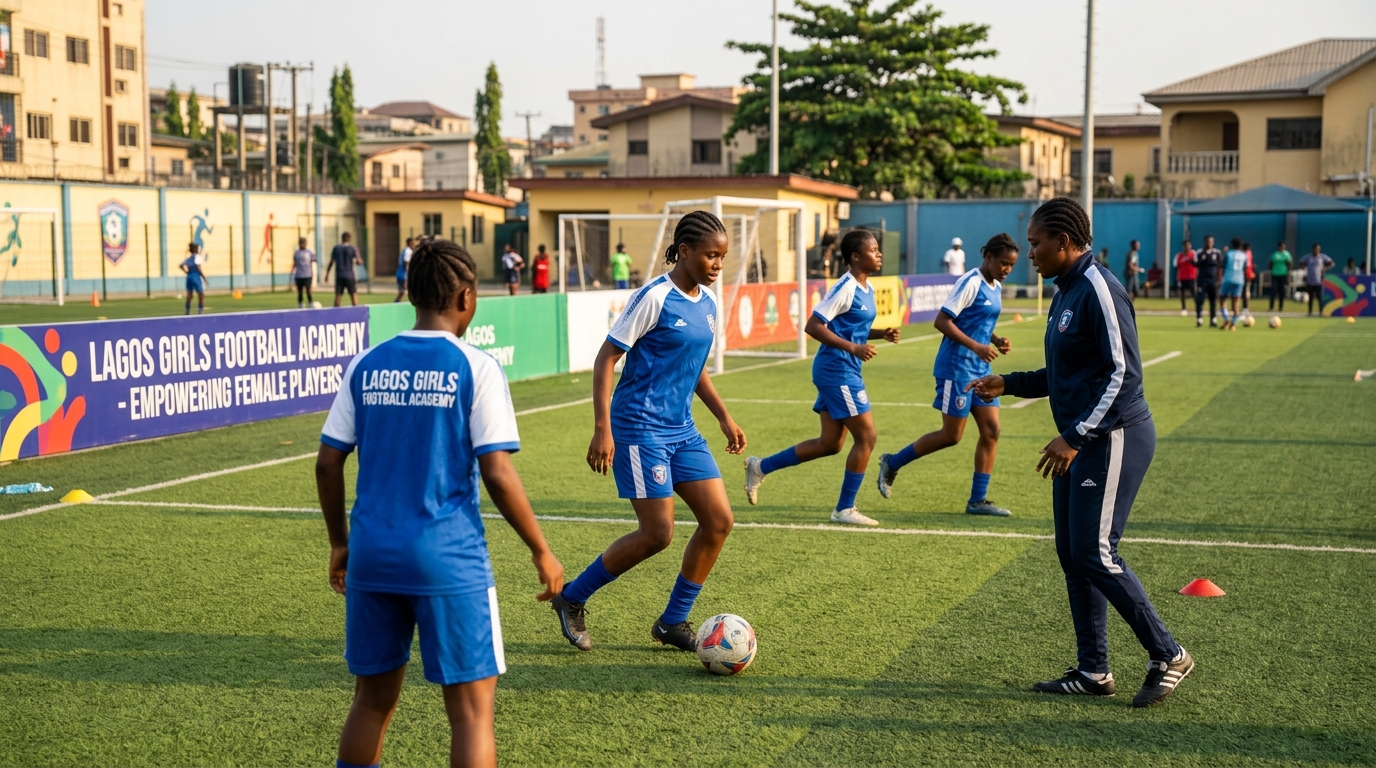
Several established football organisations in Nigeria run programmes that include female players or are dedicated specifically to women’s football development.
The Nigeria Football Federation has historically run national women’s development programmes that identify and develop talented female players from across the country.
State football associations in several states also run female football programmes, though the consistency and quality of these varies significantly from state to state.
Some private academies have recognised the opportunity in female football development and have created dedicated programmes or integrated female players into their existing structures.
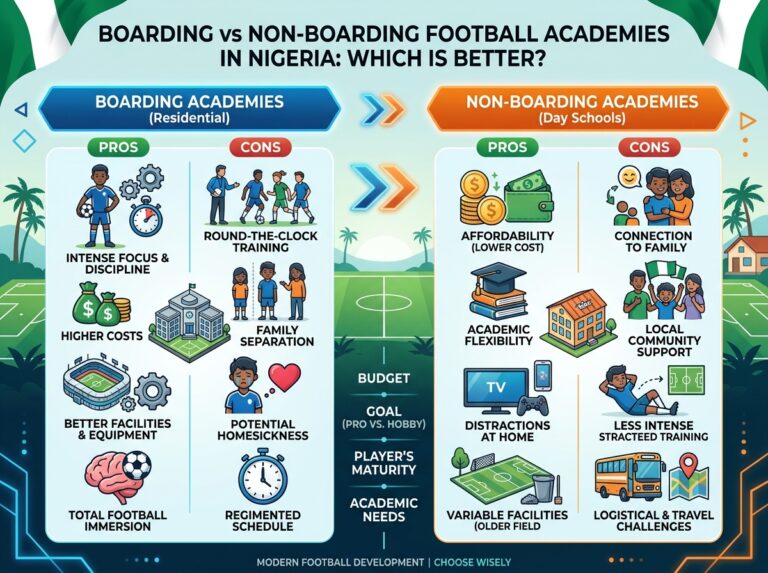
These tend to be concentrated in major cities. Parents in other parts of the country may find that the nearest serious female football programme requires their daughter to travel or relocate, which brings the boarding versus day academy question into sharp focus.
Several universities in Nigeria actively recruit female football talent for their university teams and offer sports scholarships to exceptional players.
This route is worth researching for older teenage players who are approaching university age and who want to continue developing their football alongside their education.
What Female Players Should Expect at Mixed Academies
Some academies that primarily serve male players will accept female players who are good enough to train alongside the boys. This arrangement works well for some players and less well for others.
A technically strong and physically capable female player who is comfortable in a predominantly male training environment can benefit significantly from the higher intensity and competitiveness of training with male peers.
However parents should ask specific questions before enrolling a daughter in a mixed academy.
Are there separate changing facilities for female players?
Is there at least one female coach or a designated female member of staff responsible for the welfare of female players?
Has the academy had female players before and how did that experience go?
How does the coaching staff handle any issues of respect or appropriate conduct between male and female players?
A well-run mixed academy that has genuinely thought through these questions will give you clear, confident answers. One that has not thought about them at all is telling you something important about how prepared they are to properly support a female player.
Addressing Cultural Resistance
In many Nigerian communities, a girl who wants to play football seriously will encounter resistance that has nothing to do with her ability.
Family members, neighbours, church communities, and even teachers sometimes express the view that football is not an appropriate pursuit for a girl, that it will interfere with her femininity, her marriage prospects, or her focus on education.
These attitudes are real and parents who want to support a daughter’s football ambitions need to be prepared to navigate them. The most effective approach is usually to demonstrate through results rather than argument.
A daughter who is developing noticeably as a player, who is maintaining her academic performance, and who is clearly thriving in the environment tends to gradually shift the opinions of even initially resistant family members.
It also helps to point to the concrete examples of what women’s football can offer.
The Super Falcons players who have earned professional contracts abroad, the female footballers who have received university scholarships because of their ability, the young women whose football careers have opened international doors that would otherwise have been inaccessible. These are not abstract possibilities.
They are documented realities that demonstrate the tangible value of taking a girl’s football talent seriously.
What Parents of Talented Girls Should Do Right Now
If your daughter has genuine talent and passion for football, the worst thing you can do is wait for the perfect programme to appear in your neighbourhood.
Start by researching what exists within a reasonable distance. Contact your state football association and ask specifically about female football development programmes.
Search for female football academies and clubs in your region. Reach out to the football departments of universities in your state and ask about their female football programmes and whether they run development initiatives for younger players.
Connect with other parents of female footballers in your area. The female football community in Nigeria is smaller and more tightly connected than the male equivalent, which means that people within it tend to know what opportunities exist and are often willing to share that information with families who are genuinely looking.
Make sure your daughter has a football profile and if possible a video of her playing that you can share with academies and programmes you contact. A well-documented talented female player in a market where serious female talent is actively being sought is in a stronger position than she might realise.
Nigeria needs its next generation of Super Falcons. Your daughter could be one of them. The path requires more deliberate navigation than it does for male players right now, but the path exists. Start walking it today.
Written for Findin.com.ng | Parent Guides