How to Prepare Your Child for a Football Academy Trial in Nigeria
The day of a football academy trial is not where preparation begins. By the time your child walks onto that pitch, the preparation should already be weeks behind them.
Parents who understand this give their children a genuine advantage over the majority of players who show up to trials having done very little to get ready beyond the football they play every day.
This article is a practical guide for Nigerian parents who want to give their child the best possible chance of succeeding at a football academy trial.
Start Preparing Weeks in Advance
As soon as you know the trial date, treat the weeks between now and then as a preparation period with a clear purpose. This does not mean overworking your child or creating anxiety about the outcome.
It means using the available time deliberately to make sure your child arrives at the trial in the best possible condition physically, mentally, and practically.
Physical preparation should begin immediately. If your child has not been training consistently, ease them into a regular routine of football practice and general fitness work.
Running, agility exercises, and ball work done consistently over several weeks will produce a meaningfully fitter and sharper player than one who has been inactive and suddenly tries to prepare in the final few days. The body adapts to consistent work over time, not to last-minute effort.
Handle the Practical Details Early
Nothing undermines a child’s confidence on trial day like practical chaos. Make sure the kit is ready, clean, and properly fitting well before the trial. Boots should be broken in, not brand new and stiff on the day. Shin guards must fit properly. If the academy has specified any particular kit requirements in their trial instructions, meet those requirements exactly.
Find out the trial venue and visit it in advance if possible. Knowing exactly where to go on the day removes one source of stress entirely.
Plan your travel route and your departure time to arrive at least thirty minutes before the trial begins. Arriving late to a football academy trial creates an immediate negative impression that is difficult to recover from regardless of how well the player performs once they get on the pitch.
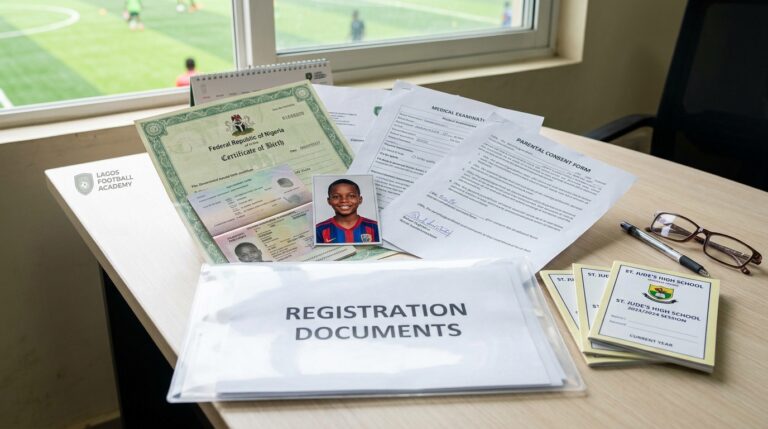
Prepare a bag the night before that contains everything your child will need: water, a light snack for before or after the session, a change of clothes, and any documents the academy has requested for registration purposes.
Nutrition and Rest in the Days Before
The two or three days before a trial matter more than most parents realise. A child who has been sleeping poorly and eating irregularly will perform below their actual level regardless of their talent. In the days leading up to the trial, prioritise proper meals, adequate sleep, and reduced stress wherever possible.
On the morning of the trial, make sure your child eats a proper meal at least ninety minutes before the session begins. Exercising intensely on an empty stomach produces poor performance and increases injury risk.
The meal should be something familiar and easily digestible, not a new or heavy food that might cause discomfort during physical activity. Ensure they are properly hydrated throughout the day leading up to the trial and during it.
Prepare Them Mentally Without Adding Pressure
This is the part that many well-meaning Nigerian parents get wrong. The desire to help your child succeed can tip over into creating so much pressure around the trial that the child arrives anxious and tense rather than confident and ready to express themselves.
Talk to your child about the trial in a way that is encouraging without being loaded with expectation.
Let them know you are proud of them for having the opportunity and that you will be proud of them regardless of the outcome. Mean it. Children are remarkably good at sensing whether the adults around them genuinely mean what they say or whether their love and approval is quietly conditional on a particular result.
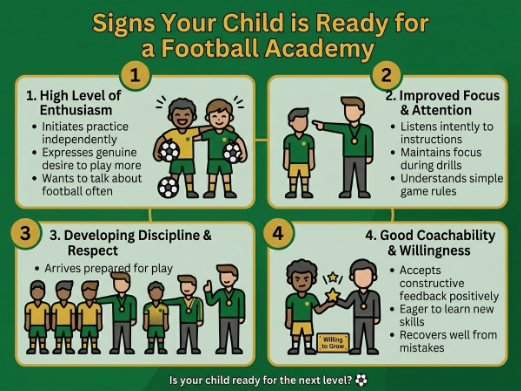
Help your child understand what the coaches will be watching for. Not so they can perform artificially, but so they know that working hard, listening to instructions, and showing the right attitude matters just as much as technical ability.
A child who understands this goes into the trial knowing that their character and effort are things they have full control over, which is genuinely calming and empowering.
On the Day of the Trial
Wake up early enough that the morning is not rushed. A hurried, stressful morning sets a poor emotional tone for the rest of the day. Keep the atmosphere at home calm and positive. Eat together if possible. Leave for the venue with plenty of time.
When you arrive, encourage your child to introduce themselves to the coaching staff if the opportunity arises. A confident, respectful greeting makes an impression.
Help them warm up properly if a structured warm-up has not yet begun. Light jogging, dynamic stretching, and some ball work will prepare the body for the intensity of the trial session.
Once the trial begins, your role as a parent is to watch and support quietly.
Shouting instructions from the sideline, criticising decisions, or showing visible frustration at mistakes actively harms your child’s performance and creates a negative impression with the coaching staff.
Coaches notice parents as well as players, and a parent who is disruptive or who undermines their child’s confidence from the touchline is a concern that some academies factor into their decisions.
Cheer encouragingly. Stay calm. Let your child play.
After the Trial
Whether the trial goes well or not, your response in the immediate aftermath matters enormously for your child’s relationship with football and with you. If they performed well and are called back, celebrate appropriately without making the celebration so large that the next challenge feels impossibly weighted.
If they did not get the result they hoped for, acknowledge their disappointment genuinely and then help them find the lessons in the experience.
A trial that does not result in selection is not a verdict on your child’s future in football. It is one data point in a long journey. Many players who were not selected at one academy went on to succeed at others.
Many who were not ready at one point in their development were more than ready a year later. The players who eventually make it are almost always the ones whose families helped them treat setbacks as information rather than as defeat.
Your child’s football journey is long. This trial is one moment in it. Support them through it with the kind of steady, loving presence that makes the whole journey possible.
Written for Findin.com.ng | Parent Guides