How to Become a Virtual Assistant in Nigeria (Step-by-Step)
Virtual assistant work is one of the most accessible remote jobs for Nigerians. You don’t need a degree in a specific field, expensive equipment, or years of experience. What you need is organization, good communication, and willingness to learn. This guide walks you through becoming a VA from scratch.
What Does a Virtual Assistant Actually Do?
A virtual assistant provides administrative, technical, or creative support to clients remotely. Think of it as being someone’s right hand, but you work from home instead of an office.
The work varies widely depending on the client, but common tasks include:
Administrative Tasks:
- Managing emails and responding to routine messages
- Scheduling appointments and managing calendars
- Organizing files and documents
- Data entry and basic bookkeeping
- Travel arrangements and research
- Preparing reports and presentations
Customer Service:
- Responding to customer inquiries
- Managing customer complaints
- Live chat support
- Email support
- Social media message management
Content and Marketing:
- Social media management and scheduling posts
- Basic graphic design for social media
- Blog post formatting and publishing
- Email newsletter management
- Basic content research and curation
Technical Tasks:
- Website updates on WordPress or similar platforms
- Basic troubleshooting
- CRM management
- Database organization
- Setting up automation tools
Most VAs specialize in 2-3 areas rather than trying to do everything. You’ll naturally develop your niche as you work with different clients.
Skills You Need
The good news is that most VA skills can be learned for free online. Here are the essential ones:
Communication Skills: This is non-negotiable. You need to write clear, professional emails and understand instructions properly. Poor English will limit your opportunities significantly. If your written English needs work, focus on improving it before anything else.
Organization and Time Management: VAs juggle multiple tasks and clients. You need systems to track what needs to be done and when. Missing deadlines or forgetting tasks will cost you clients quickly.
Tech Literacy: You don’t need to be a programmer, but you should be comfortable learning new software quickly. Most clients use tools like Google Workspace, Microsoft Office, project management software, and various other platforms.
Attention to Detail: Small mistakes in client work add up. Sending an email to the wrong person, booking the wrong date, or missing an error in a document can damage your reputation.
Problem Solving: Clients hire VAs to make their lives easier, not harder. When something goes wrong, they expect you to figure it out or at least try before asking for help.
Self-Discipline: Nobody is watching you work. You need to manage your own time and stay productive without supervision.
Tools Every VA Should Know
Start learning these tools. You don’t need to master everything immediately, but familiarity helps:
Essential Tools:
- Google Workspace (Gmail, Docs, Sheets, Calendar, Drive)
- Microsoft Office (Word, Excel, PowerPoint)
- Zoom or Google Meet for video calls
- Basic email etiquette and management
Project Management:
- Trello
- Asana
- Monday.com
- ClickUp
Pick one and learn it well. Many clients use these to assign and track tasks.
Communication:
- Slack
- Microsoft Teams
- WhatsApp Business
Scheduling:
- Calendly
- Acuity Scheduling
- Google Calendar
Social Media Management:
- Buffer or Hootsuite for scheduling
- Canva for basic graphics
- Basic understanding of major platforms
File Storage:
- Google Drive
- Dropbox
- OneDrive
Most of these have free versions you can practice with. Watch YouTube tutorials and actually use the tools, don’t just read about them.
Step-by-Step Guide to Becoming a VA
Step 1: Assess Your Current Skills
Be honest about what you already know. Can you manage email professionally? Are you organized? Do you type reasonably fast? Can you follow instructions carefully?
List your current skills, even if they seem basic. Then list skills you need to learn based on the tools mentioned above.
Step 2: Learn the Basics
Spend 2-4 weeks learning the essential tools. You don’t need paid courses for this. Free resources include:
- YouTube tutorials for specific tools
- Tool websites often have free training (Google has free courses for its workspace)
- Practice by managing your own schedules and projects
- Volunteer to help a friend or small business for free to practice
Create dummy projects for yourself. Set up a fake business calendar, create sample reports, practice scheduling mock appointments. The more you practice, the more confident you’ll become.
Step 3: Define Your Services
Don’t just call yourself a “general virtual assistant.” That’s too vague. Instead, create specific service packages.
Examples:
- Email management and calendar scheduling
- Social media management for small businesses
- Customer service and inbox management
- Administrative support for busy entrepreneurs
- E-commerce store assistance
Think about what you enjoy and what you’re good at. That’s your starting point.
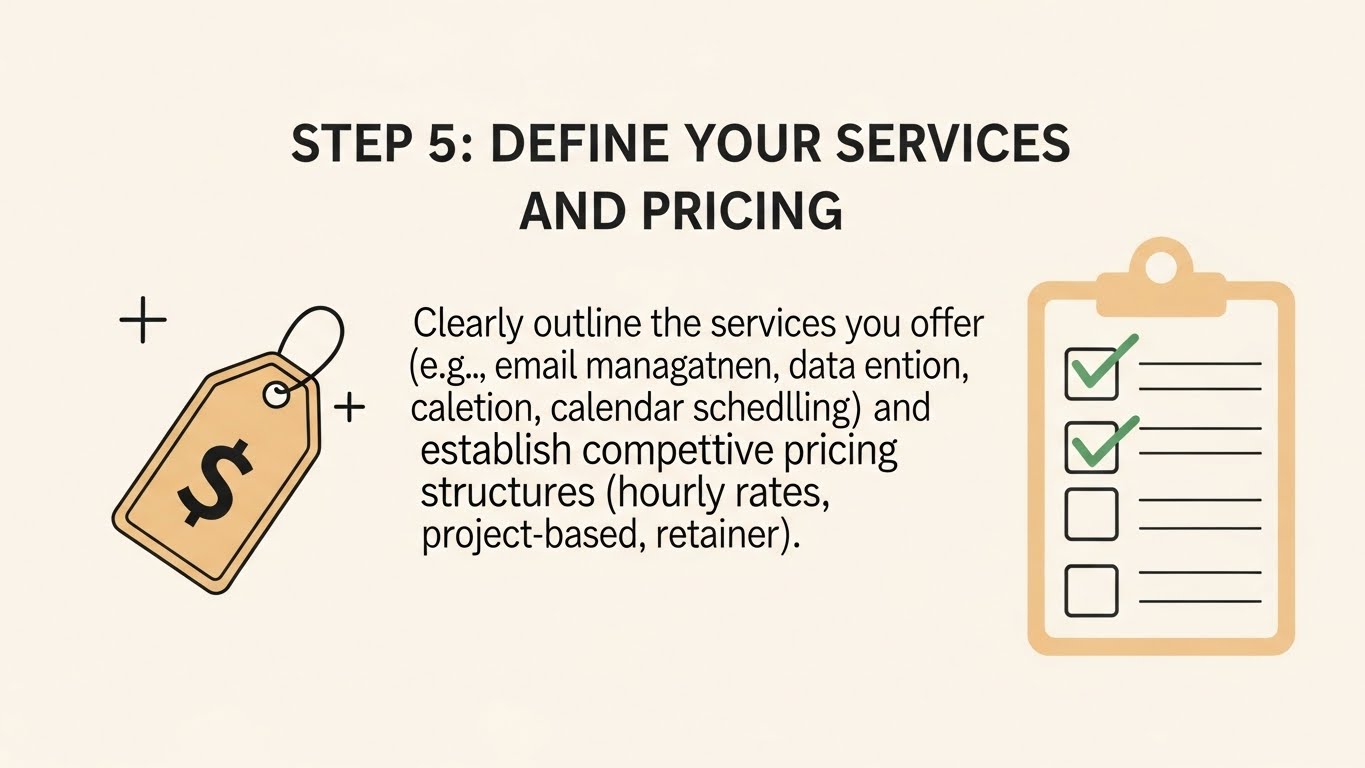
Step 4: Set Your Rates
This is tricky for beginners. You want to be competitive but not undervalue yourself.
Research rates by looking at other Nigerian VAs on platforms like Upwork or Fiverr. Starting rates typically range from:
- 1,500 to 3,000 naira per hour for basic tasks
- 2,500 to 5,000 naira per hour for specialized services
- Monthly retainer packages: 40,000 to 150,000 naira depending on hours and tasks
Start on the lower end to build your portfolio and reviews. As you gain experience and testimonials, raise your rates.
Package pricing can work better than hourly:
- Basic package: 50,000 naira/month for 20 hours
- Standard package: 90,000 naira/month for 40 hours
- Premium package: 150,000 naira/month for 60 hours
Adjust based on what makes sense for the services you offer.
Step 5: Create Your Online Presence
You need to be findable and look professional.
LinkedIn Profile: Create a strong LinkedIn profile positioning yourself as a VA. Include:
- Professional photo
- Clear headline stating you’re a VA and what you specialize in
- Summary explaining who you help and how
- List relevant skills
- Connect with potential clients and other VAs
Freelance Platform Profiles: Set up profiles on:
- Upwork (most important for VAs)
- Fiverr
- Freelancer.com
Take time to complete these profiles fully. Include:
- Professional description of services
- Clear pricing
- Portfolio items (even if they’re practice projects initially)
- Any relevant experience
Optional but helpful:
- Simple website showcasing your services
- Instagram or Twitter account sharing VA tips and your journey
Step 6: Find Your First Clients
This is the hardest part. Your first few clients might take weeks or even months to land. Here’s how to find them:
Freelance Platforms: Apply to jobs daily on Upwork and Fiverr. Write personalized proposals. Don’t copy-paste. Show you read and understood what they need. Apply to jobs you actually qualify for, not everything.
LinkedIn Outreach: Find small business owners, entrepreneurs, coaches, and consultants. Send connection requests. Once connected, offer value before pitching. Comment on their posts, engage genuinely, then mention your services naturally.
Facebook Groups: Join groups for entrepreneurs, small business owners, and virtual assistants. Some groups allow self-promotion on specific days. Others have job postings.
Direct Outreach: Identify businesses that might need help and email them directly. Small e-commerce stores, busy consultants, and online coaches often need VAs but haven’t thought to hire one yet.
Networking: Tell everyone what you do. Friends, family, former colleagues. Sometimes your first client comes from an unexpected referral.
Start Free or Very Cheap: Offer to help one person for free or very cheap for a month in exchange for a detailed testimonial. This gives you real experience and a case study to show other clients.
Step 7: Deliver Excellent Work
Once you land a client, focus on exceeding expectations:
- Respond quickly to messages
- Ask clarifying questions rather than guessing
- Update them regularly on progress
- Meet all deadlines, or communicate early if something will be late
- Go slightly beyond what they asked for when possible
- Be proactive about spotting and solving problems
- Keep detailed notes about their preferences and processes
Great work leads to repeat clients, referrals, and testimonials that help you land more clients.
Step 8: Ask for Testimonials and Referrals
After successfully completing work for a client, ask for a testimonial. Make it easy by asking specific questions:
- What problem were you trying to solve?
- How did I help?
- What was the result?
- Would you recommend me to others?
Also ask if they know anyone else who might need VA services. Satisfied clients are often happy to refer you.
Step 9: Scale Your Income
Once you have 1-2 steady clients and good reviews, you can:
Raise Your Rates: Every 3-6 months, increase rates for new clients. Existing clients can stay at old rates or you can raise them gradually with advance notice.
Add Clients: Take on more clients until you’re working full-time hours. Most VAs manage 3-5 clients simultaneously.
Specialize: As you work, you’ll discover what you’re best at and enjoy most. Focus on those services and charge premium rates.
Create Retainer Packages: Monthly retainers provide steady income instead of one-off projects. Clients also prefer the reliability.
Hire Subcontractors: Some VAs build agencies by hiring other VAs to work under them. This is more advanced but possible.
Common Challenges and Solutions
Challenge: Not getting hired Solution: Improve your proposals. Make them specific to each job. Show you understand their needs. Lower your rates temporarily to build reviews.
Challenge: Difficult clients Solution: Set clear boundaries and expectations upfront. Document everything. Know when to professionally end a relationship.
Challenge: Too much work Solution: Learn to say no. Raise rates. Focus on best-paying clients.
Challenge: Payment issues Solution: Use platform escrow when possible. For direct clients, get partial payment upfront. Have clear payment terms in writing.
Challenge: Feeling overwhelmed Solution: Improve your systems. Use project management tools. Break big tasks into smaller ones. Set realistic expectations with clients.
Nigerian VA Success Stories
Many Nigerians have built successful VA careers. Some started while in university, others during NYSC, some as stay-at-home parents. The common thread is consistency and professionalism.
One VA started charging 2,000 naira per hour and now charges 8,000 naira per hour with more work than she can handle. Another started as a general VA and now specializes in e-commerce support, earning over 300,000 naira monthly.
The opportunity exists. You just need to put in the work to build your reputation.
Is VA Work Right for You?
Virtual assistant work is great if you:
- Are naturally organized
- Enjoy helping others succeed
- Like variety in your work
- Are self-motivated
- Have good attention to detail
- Communicate well in writing
It might not be ideal if you:
- Need constant supervision to stay productive
- Dislike administrative tasks
- Can’t handle multiple clients/projects
- Struggle with written communication
- Get bored easily with routine tasks
Time Investment
Expect to spend:
- 2-4 weeks learning basic tools and setup
- 4-8 weeks landing your first paying client
- 3-6 months building to full-time income
Some people move faster, many take longer. The key is consistent effort and continuous learning.
Final Thoughts
Becoming a virtual assistant is one of the most realistic paths to remote work for Nigerians. The barrier to entry is low, the skills are learnable, and the demand is real.
But it’s not automatic money. You’ll compete with VAs from around the world, including countries with lower costs of living. Your advantage is strong English, cultural flexibility, and willingness to work hard.
Start today by picking one tool to learn. Watch a tutorial. Practice using it. Then move to the next step. Break it down into small actions and you’ll make progress.
The first client is the hardest to get. After that, with good work and professionalism, building a sustainable VA career becomes much more achievable.