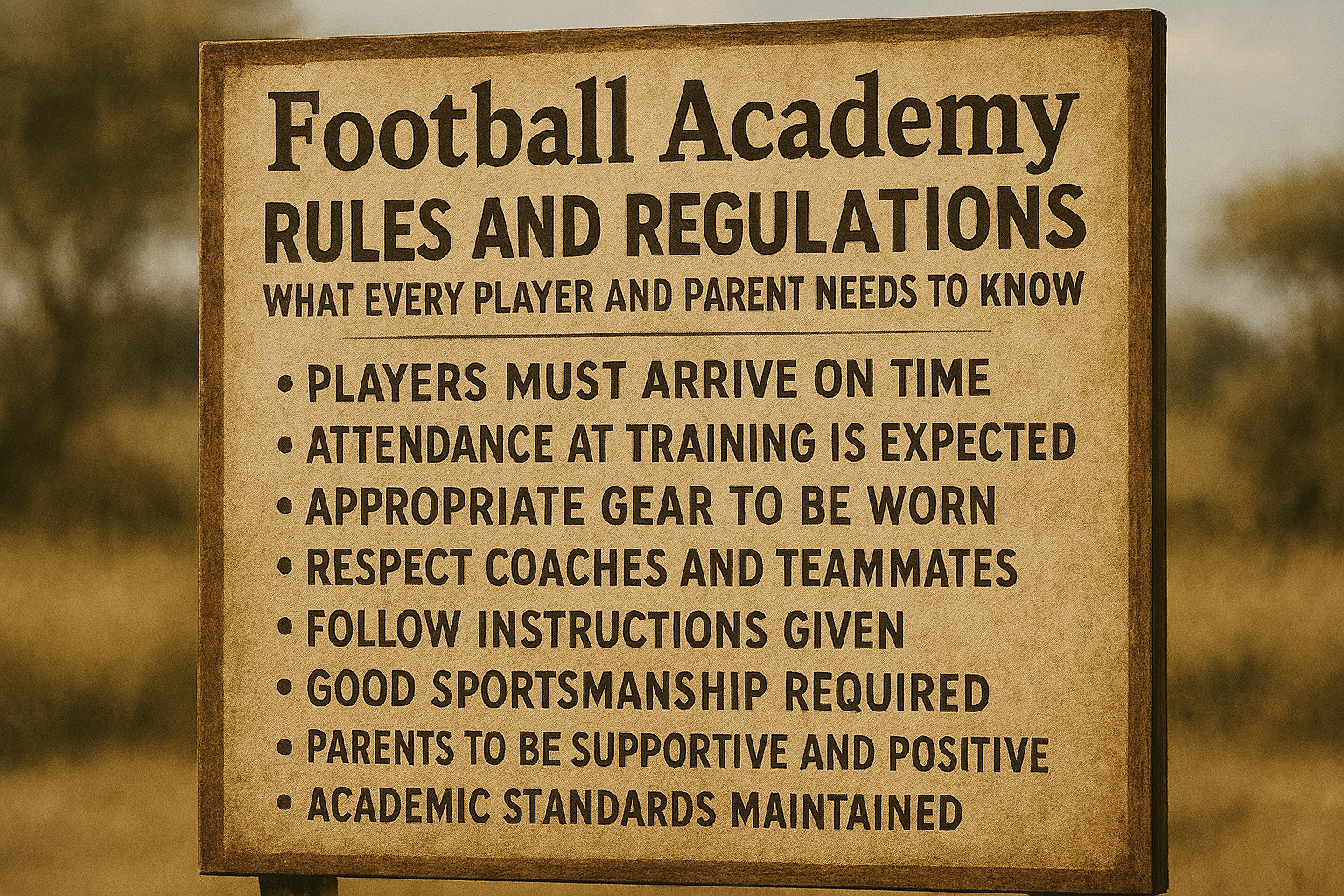
Football Academy Rules and Regulations: What Every Player and Parent Needs to Know
If you are thinking of enrolling your child in a football academy, or you are a young player who wants to join one, there is something important you need to understand before anything else.
Football academies are not like your regular Sunday league kickabout. They are serious places with serious expectations. And if you walk in without knowing the rules, you might find yourself walking out faster than you expected.
This guide will take you through the key rules and regulations that most football academies in Nigeria follow. Whether you are a parent, a player, or just curious about how these places work, by the end of this article you will know exactly what to expect.
Attendance is Not Optional
The first thing any coach will tell you is that showing up matters. Not just showing up for matches, but showing up for every single training session.
Most academies in Nigeria have a strict attendance policy. If you miss training without a good reason, there will be consequences. It might start with a warning. Miss too many sessions and you could be suspended. Keep it up and your spot in the academy will be given to someone who actually wants it.
This is something parents need to take seriously too. Paying the enrollment fee does not guarantee your child’s place. That place is earned every week through commitment and consistency. If your child is sick or has a genuine reason to miss a session, the right thing to do is call the coach ahead of time. Do not just stay at home and say nothing.
Respect is Non-Negotiable
Inside any football academy, respect is the foundation everything else is built on. Coaches, referees, teammates, older players, even visitors on the sideline. Everyone deserves to be treated with respect.
Any player who uses abusive language, gets into a fight, or behaves in a way that embarrasses the academy will face disciplinary action. It could be a suspension. In serious cases, it could mean being removed from the academy permanently.
And here is the part that surprises some people. The rules around behaviour do not stop at the training ground. Some academies will take action against a player who is causing trouble in school or posting inappropriate things on social media. The academy’s reputation matters to them, and they expect their players to protect it.
For parents, the best thing you can do is have this conversation with your child before they ever set foot in the academy. Teach them what it means to carry themselves well. Coaches notice the difference.
How You Look When You Show Up Matters
This one catches many new players off guard. Football academies in Nigeria care about how their players present themselves before training even starts.
You are expected to show up in clean, proper training kit every session. Torn or dirty clothing is not acceptable. Your fingernails need to be cut short because long nails can injure other players during training. Jewellery like chains, rings, and earrings must be removed before you step on the pitch.
Some academies also have rules about hairstyles. It varies from place to place, but most want players looking neat and professional.
Leave your phone, your watch, and any valuables at home if you can. Most academies will not take responsibility if anything goes missing on the training ground.
None of this is about being unnecessarily strict. It is about creating an environment where players are focused and ready to work.
You Must Be Properly Registered
Before you can officially train or play for any academy, your registration must be complete. This is not something you can skip or delay.
What most academies will ask for includes a birth certificate or age declaration, passport photographs, a consent form signed by a parent or guardian if the player is under 18, and payment of any enrollment fees. You will also likely be asked to sign a player agreement that spells out your rights and responsibilities as a member.
After registration, many academies issue an ID card. That card needs to come with you to every session. Forget it and you may not be allowed to train that day.
One more thing parents should know. Any football academy operating in Nigeria should be registered with the State Football Association. Before you pay anything, ask to see proof that the academy is legitimate. A proper academy will have no problem showing you this.
You Cannot Just Train Anywhere You Like
When you join a football academy and sign their agreement, you are committing to that academy. You cannot quietly go and train at another club on the side without their permission.
Playing for a rival academy or club without written authorisation from your current one is a breach of your agreement and can lead to serious consequences. If you want to transfer to another academy, there is a formal process for doing that. You cannot simply leave without following it.
This protects the time and effort coaches have put into developing you as a player. It also protects you, because a transfer done properly keeps your football record clean.
If another academy ever approaches your child directly without going through your current academy, that is a red flag. Always report it and let the right people handle it properly.
Health and Injury Rules
A good academy takes care of its players. But players also have responsibilities when it comes to their health.
When you register, you are expected to disclose any medical conditions or existing injuries. If you get injured during training, you tell your coach immediately. You do not push through it and hope for the best. You follow the recovery plan and return only when you are cleared to do so.
Reputable academies will have some form of insurance cover for players who get injured. Before you enroll your child, ask about this directly. Ask what happens if your child gets hurt and who is responsible for the medical costs. If the academy cannot give you a clear answer, think carefully before committing.
School Still Comes First for Young Players
For players between the ages of 10 and 18, most serious academies in Nigeria will expect you to keep up with your schoolwork alongside your football training.
Some academies require parents to share school reports regularly. Others will suspend a player from training if their grades fall below a certain standard. Training timetables are usually designed to avoid clashing with school hours for this very reason.
This is actually one of the wisest rules any academy can have. Football careers can end suddenly because of injury or simply because the level of competition is too high. A player who has kept up with their education always has something to fall back on. The best academies understand this and build it into how they operate.
Frequently Asked Questions
What happens if a player breaks the rules?
It depends on how serious the offence is. Minor issues might result in a verbal warning or being made to sit out a session. More serious behaviour like fighting or persistent absence can lead to suspension or permanent dismissal from the academy.
Can parents come and watch training sessions?
Some academies allow it and some do not. It is best to ask the academy directly before assuming either way. Many coaches find that parental presence can distract young players, so they prefer a drop-off and pickup arrangement.
Are the rules the same in every academy?
The core rules around discipline, attendance, and registration are similar across most reputable academies. But the specifics differ. Always read the academy’s own handbook or rulebook carefully before signing anything.
What should I do if my child is being treated unfairly?
Start by speaking with the coach or the academy manager directly. If that does not resolve the issue, you can escalate to the State Football Association. Try not to just withdraw your child without following the proper process as this could affect their ability to register at another academy later.
Before You Go
Football academy rules and regulations are not there to make life hard for players and parents. They exist because developing a young footballer properly requires structure, commitment, and professionalism from everyone involved.
Take the time to understand the rules before you enroll. Ask questions. Read the agreement carefully. And if an academy cannot clearly explain its own rules to you, that might be your sign to keep looking.
For more guides on finding the right football academy in Nigeria, check out our other articles right here on findin.com.ng.