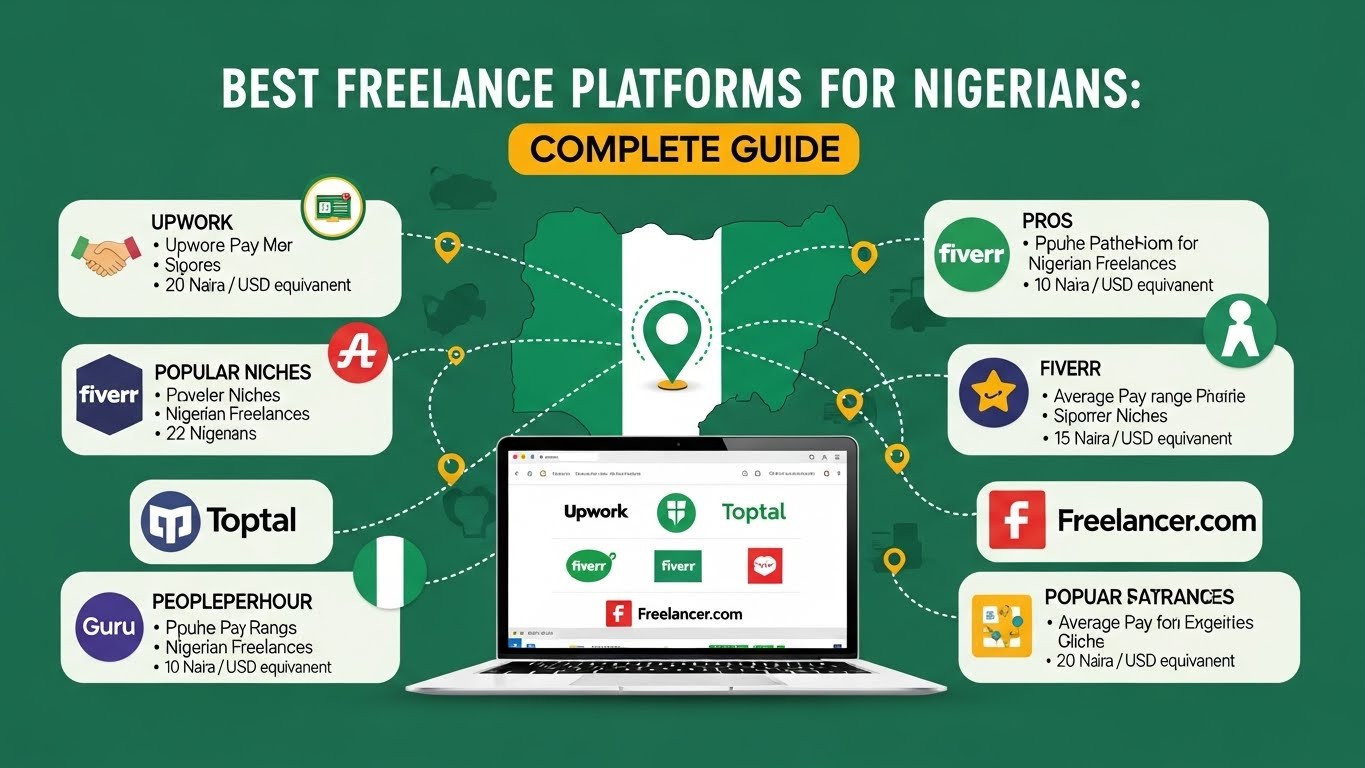
Best Freelance Platforms for Nigerians: Complete Guide
Finding legitimate freelance platforms that accept Nigerians and actually pay can be frustrating. Many platforms either don’t accept Nigerian registration or make it extremely difficult to get paid. This guide covers the platforms that work for Nigerians, how to succeed on each, and realistic expectations for earnings.
Why Most Platforms Are Difficult for Nigerians
Before we dive into the platforms that work, let’s address the elephant in the room. Many international freelance platforms are skeptical about Nigerian freelancers because of historical fraud issues. This isn’t fair to legitimate professionals, but it’s the reality we’re dealing with.
The platforms listed here either openly accept Nigerians or have enough Nigerian freelancers succeeding on them that we know they work. Some require more effort to get accepted, but it’s possible.
Top Freelance Platforms for Nigerians
1. Upwork
What it is: The largest freelance marketplace globally with millions of jobs posted yearly
Does it accept Nigerians: Yes, but account approval can be strict
Best for: Writers, developers, designers, virtual assistants, customer service, data entry
Fee structure:
- 10% fee on earnings over $500 with a client
- 20% fee on first $500 earned with each client
- 5% fee on earnings over $10,000 with a client
Payment methods for Nigerians:
- Payoneer (most reliable)
- Direct bank transfer (if available)
- Wire transfer (high fees)
Pros:
- Highest number of job opportunities
- Professional clients who pay well
- Built-in payment protection
- Good for long-term client relationships
- Escrow system protects both parties
Cons:
- Very competitive, especially for beginners
- Account suspension can happen without clear reasons
- High fees on initial earnings
- Profile approval is getting stricter
- Can take weeks or months to land first job
Tips for success:
- Complete your profile 100% before applying to jobs
- Take Upwork skill tests to boost credibility
- Start with a competitive (lower) rate to build reviews
- Write personalized proposals, not copy-paste templates
- Focus on quality over quantity when applying
- Respond quickly to client messages
- Build your portfolio outside Upwork first
Realistic first month: Most people earn nothing in month one. You’re competing with thousands of proposals. Month 2-3 is when consistent freelancers start landing gigs.
2. Fiverr
What it is: A marketplace where you create service packages (gigs) that clients buy
Does it accept Nigerians: Yes, registration is straightforward
Best for: Graphic design, writing, video editing, voiceover, social media services, quick tasks
Fee structure:
- 20% commission on all earnings
- Additional fees for currency conversion
Payment methods for Nigerians:
- Payoneer (recommended)
- Bank transfer
- PayPal (limited functionality in Nigeria)
Pros:
- Easy to get started
- You create gigs and clients come to you
- Lower barrier to entry than Upwork
- Good for beginners building a portfolio
- Clear pricing structure
- Faster path to first income
Cons:
- Very saturated in popular categories
- Race to the bottom on pricing
- 20% fee is steep
- Takes time to rank in search
- Client quality varies widely
- Difficult to raise prices once established
Tips for success:
- Research what’s selling before creating gigs
- Use all 7 gig slots wisely
- Create attractive gig images
- Price competitively initially
- Deliver more than promised
- Get those first 5-star reviews quickly
- Offer extras to increase order value
- Be online during peak US hours if targeting international clients
Realistic first month: Some people make their first sale within days, others wait weeks. Consistency is key. First month earnings typically range from 0 to 50,000 naira if you’re active.
3. Freelancer.com
What it is: Similar to Upwork, a bidding-based freelance marketplace
Does it accept Nigerians: Yes
Best for: Programming, writing, data entry, design, marketing
Fee structure:
- 10% or $5 fee (whichever is greater) on fixed-price projects
- 10% or $5 fee on milestone payments
Payment methods for Nigerians:
- Payoneer
- Wire transfer
- Skrill
Pros:
- Accepts Nigerians without major restrictions
- Lots of job categories
- Contest feature to showcase skills
- Lower competition than Upwork in some niches
Cons:
- Many low-budget clients
- Lots of competition from low-cost countries
- Platform can feel cluttered
- Some clients are difficult to work with
- Payment disputes happen
Tips for success:
- Enter contests to build portfolio
- Focus on niche skills rather than general services
- Build a strong profile with portfolio items
- Be very clear about scope before starting work
- Use milestone payments for protection
Realistic first month: Similar to Upwork, expect slow start. Landing 1-2 small projects in first month is good progress.
4. Toptal
What it is: An exclusive network for top freelancers (top 3% claim)
Does it accept Nigerians: Yes, but vetting process is rigorous
Best for: Software developers, designers, finance experts, project managers
Fee structure:
- No fees charged to freelancers
- Toptal charges clients directly
Payment methods for Nigerians:
- Wire transfer
- Payoneer
Pros:
- Highest quality clients
- Best rates in the industry
- No bidding required
- Professional work environment
- Long-term projects common
- Toptal handles client acquisition
Cons:
- Extremely difficult to get accepted
- Lengthy vetting process with tests and interviews
- Only for experienced professionals
- Not suitable for beginners
- Limited to certain skill categories
Tips for success:
- Only apply if you have strong portfolio
- Prepare thoroughly for technical tests
- Be ready for English proficiency assessment
- Have references ready
- Showcase real work experience
Realistic first month: If accepted, you can start earning six figures in naira from day one. But getting accepted might take months of preparation.
5. PeoplePerHour
What it is: UK-based freelance platform popular in Europe
Does it accept Nigerians: Yes
Best for: Writing, web development, design, digital marketing
Fee structure:
- 20% commission on first $350 earned from each client
- 7.5% on earnings between $350-$5,000
- 3.5% on earnings over $5,000
Payment methods for Nigerians:
- PayPal (limited for Nigerians)
- Bank transfer
Pros:
- Less saturated than Upwork/Fiverr
- European clients often pay well
- Hourlies feature for quick jobs
- Profile visibility can be good
Cons:
- Payment options limited for Nigerians
- Smaller job pool than major platforms
- Less known, so fewer clients
- Some Nigerians report payment issues
Tips for success:
- Create attractive Hourlies (pre-packaged services)
- Target UK/European time zones for proposals
- Build trust through smaller jobs first
- Have backup payment method ready
6. Guru
What it is: Professional freelance marketplace
Does it accept Nigerians: Yes
Best for: Programming, writing, design, business consulting
Fee structure:
- 8.95% commission on all transactions
Payment methods for Nigerians:
- Payoneer
- Wire transfer
Pros:
- Lower fees than Upwork and Fiverr
- Professional client base
- WorkRooms collaboration feature
- SafePay system protects both parties
Cons:
- Less traffic than bigger platforms
- Membership upgrades needed for full features
- Smaller job pool
Tips for success:
- Complete all profile sections
- Use SafePay for all transactions
- Build long-term client relationships
- Consider paid membership once established
7. 99designs
What it is: Design contest and project platform
Does it accept Nigerians: Yes
Best for: Graphic designers, logo designers, illustrators
Fee structure:
- Platform takes cut from client payment
- Contest prizes are fixed
Payment methods for Nigerians:
- Payoneer
- PayPal
Pros:
- Specialized for designers
- Contest format lets you compete fairly
- Build portfolio through contests
- Direct project opportunities
Cons:
- You invest time without guaranteed payment in contests
- Can be time-consuming
- Competition is intense
- Not suitable for non-designers
Tips for success:
- Start with lower-tier contests
- Study winning designs
- Submit multiple concepts
- Build portfolio even from non-winning entries
8. Asuqu
What it is: Nigerian freelance marketplace
Does it accept Nigerians: Yes, it’s made for Nigerians
Best for: All services, especially targeting Nigerian clients
Fee structure:
- Lower fees than international platforms
- Local payment in naira
Payment methods for Nigerians:
- Direct bank transfer
- Local payment solutions
Pros:
- No international payment hassles
- Earn in naira
- Nigerian clients understand local context
- Growing platform
- No currency conversion issues
Cons:
- Smaller client base
- Lower budgets typically
- Platform still growing
- Less established than international options
Tips for success:
- Position yourself competitively
- Be responsive to local clients
- Build reputation on platform first
- Use it alongside international platforms
Payment Solutions for Nigerian Freelancers
Payoneer
This is the most reliable option for most platforms.
Pros:
- Works with most major platforms
- Relatively easy to set up
- Can receive payments in multiple currencies
- Withdraw to Nigerian bank account
- Virtual US bank account provided
Cons:
- Withdrawal fees to Nigerian banks
- Exchange rate markup
- Account can be frozen if suspicious activity
Setup: Register on Payoneer website, verify identity, link to freelance platforms
PayPal
Limited functionality in Nigeria but still useful for some platforms.
Pros:
- Widely accepted
- Easy international transfers
- Good buyer protection
Cons:
- Cannot withdraw directly to Nigerian banks
- Need workarounds (Payoneer, withdraw abroad)
- Restricted in Nigeria officially
Wise (formerly TransferWise)
Pros:
- Better exchange rates
- Multi-currency accounts
- Lower fees than some alternatives
Cons:
- Not all platforms integrate with it
- Setup can be complex for Nigerians
Common Mistakes Nigerian Freelancers Make
Starting without skills: Many people create accounts hoping to learn on the job. Build basic competency first.
Copy-pasting proposals: Clients can tell. Personalize every application even if it takes longer.
Underpricing severely: While competitive pricing helps initially, don’t work for $2/hour. Know your worth.
Not reading job descriptions: Applying to everything wastes time. Target jobs you actually qualify for.
Poor communication: Responding slowly or with unclear English hurts your chances significantly.
No portfolio: Create sample work if you don’t have client work yet. Show what you can do.
Giving up too early: First month is usually slow. Most successful freelancers struggled initially.
Not specializing: Being a jack of all trades makes you forgettable. Pick a niche and own it.
Building Your Profile for Success
Profile photo: Professional headshot. No sunglasses, no group photos, no selfies in your room.
Bio/Overview: Write clearly about what you do and who you help. Not what you want or need. Focus on client benefits.
Portfolio: Show your best 5-10 pieces. Quality over quantity. Case studies work better than just images.
Skills: Be honest. Don’t list 50 skills. Focus on what you actually do well.
Rates: Research what others in your niche charge. Start competitive but not desperately low.
Tests/Certifications: Take platform skill tests. Get free certifications (Google, HubSpot, etc.)
Realistic Earnings Timeline
Month 1: Most people earn 0-30,000 naira while learning the platform and getting first reviews.
Month 2-3: 30,000-100,000 naira as you land more consistent work.
Month 4-6: 100,000-250,000 naira with steady clients and good reviews.
Month 6+: 200,000-500,000+ naira possible with established reputation and repeat clients.
These are realistic ranges for people putting in consistent effort. Some exceed this quickly, many take longer. It depends on your skills, niche, and dedication.
Which Platform Should You Start With?
For complete beginners: Start with Fiverr. It’s easier to get your first client.
For experienced professionals: Try Upwork first for better-paying clients.
For designers: Use both 99designs and Fiverr.
For developers: Upwork and Toptal (if you can get in).
For targeting Nigerian clients: Use Asuqu alongside an international platform.
Best strategy: Create profiles on 2-3 platforms. Focus most energy on one until you understand how it works.
Final Thoughts
Freelancing on these platforms is legitimate work that pays real money. But it’s not a get-rich-quick scheme. You need skills, patience, professionalism, and consistency.
Many Nigerians are earning full-time income from freelancing. Some have left their 9-5 jobs. Others use it as solid side income. The opportunity is there, but you have to put in the work to stand out from the competition.
Start today, be patient with the process, and keep improving your skills. Your first client might take a month to land, but once you build momentum, the work can become steady and lucrative.